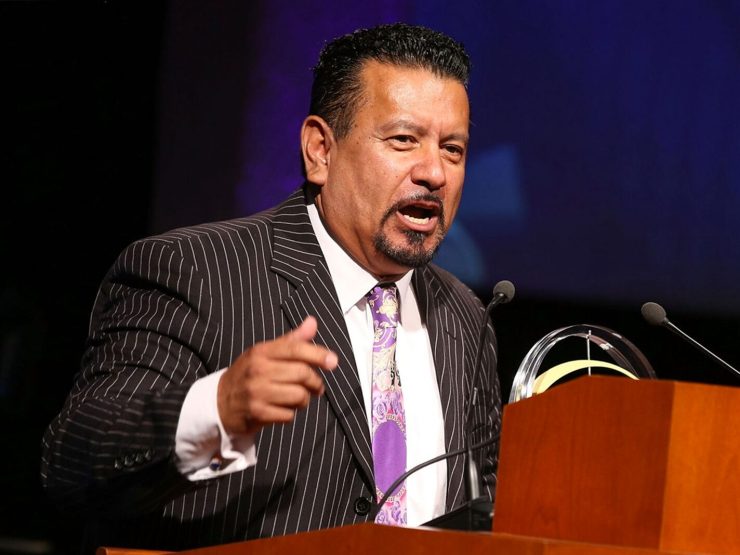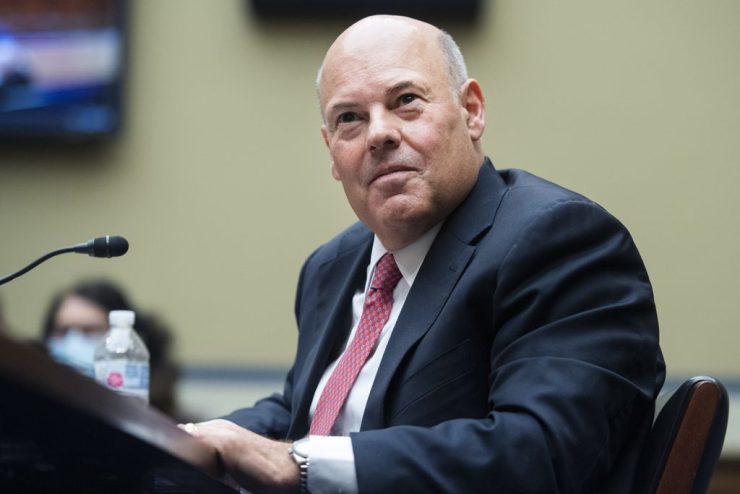
Mayor Greg Nickels and City Councilmen Richard Conlin and Tim Burgess announced Tuesday a proposal to encourage job growth by repealing the so-called head tax on Seattle businesses.
But in an election year, the proposal soon became politicized as campaigns turned on Nickels.
The annual tax of $25 per employee, known as the “employee hours tax,” was imposed in 2006 as part of a package to provide additional funding for transportation projects. The repeal would be effective Jan. 1, Nickels said in a statement.
Nickels spokesman Alex Fryer said higher-than-expected revenue from parking is expected to offset enough of the $4.7 million cost of elminating the tax to keep “Bridging the Gap” funds for transportation at around the same level next year.
But he acknowledged that eliminating the tax will mean the city will have about $5 million less for transportation improvements than it otherwise would have had.
Though the move was proposed by the council weeks ago, it has implications for the mayoral campaign. As the PostGlobe reported a couple of weeks ago, mayoral candidate Joe Mallahan also proposed the repeal. Mallahan, a T-Mobile executive, has been criticized for not offering many specific policy ideas. The repeal was one of the few he has offered, and the move takes the issue off the table.
And Mallahan, in a statement Tuesday, seized on the idea of spending less on transportation and said he would have eliminated the tax -- but more than paid for it by killing a proposal to make improvements to Mercer: “I am very pleased Mayor Greg Nickels heeded my call to stop penalizing Seattle businesses for creating new jobs. I applaud Councilmembers Tim Burgess and Richard Conlin for their diligence in addressing the issue.”
But he said that by lowering the amount available for transportation improvements, “once again, Nickels is demonstrating he is out of touch with what Seattle residents want and isn’t keeping his promise of delivering basic services to all of Seattle’s neighborhoods.”
Instead, Mallahan renewed another of his ideas, saying he would free more money for transportation and the head tax by eliminating the renovation of Mercer Street. It is favored by the South Lake Union and Queen Anne neighborhoods because it would reconnect the neighborhoods, allowing cars to cross over Aurora Avenue. Still, it is not expected to improve traffic on the corridor.
“As Seattle’s next mayor, I would recognize that we cannot afford to build Nickels’ Mercer Street pet project and use some of those funds to keep the city’s promise to improve streets and sidewalks,” Mallahan said in the statement. “Mayor Nickels wants to take away $70 million of our streets and sidewalks funding and spend it on his Mercer Street pet project so he can keep developers happy.”
Meanwhile, another candidate -- Mike McGinn -- seized on another high-priced project, replacing the Alaskan Way Viaduct with a tunnel.
"If Nickels really cared about taxes, transportation, and local businesses, he would stop championing the $4.2 billion tunnel project, which includes a $930 million commitment from Seattle residents in new taxes, utility rate increases, and local fees," McGinn said in a release. "Even worse, the state legislature has passed a law requiring Seattle to pay for all cost overruns, which on a project like this could run into billions of dollars."
"What a shell game" says McGinn. "Nickels puts out a press release saying he is cutting taxes, but at the same time he favors the biggest boondoggle this city's taxpayers may ever see."
He went after Mallahan, another challenger to survive the primary elections and run in the general election.
"Mayoral candidate Joe Mallahan also supports eliminating this important source of $4.7 million in revenues for transportation investments," McGinn's statement said, though silent on Mallahan's proposal to pay for it killing the Mercer project.
McGinn's statement said, "Nickels and Mallahan are both following the lead of the Greater Seattle Chamber of Commerce , which has actively opposed the head tax since its inception and supports the $4.2 billion dollarViaduct Tunnel."
However, the proposal was initiated by the council. Burgess said in an e-mail that politics is not a factor and that the trade-off is worth it. “Councilmember Conlin and I have been working on this since last fall, and I urged repeal during my council campaign in 2007. A couple of months ago, as part of CM Conlin’s economic stimulus work, we reached out to the mayor and began a dialog on what steps we could take to signal the city’s desire to help create a job-growth environment. We identified this repeal as one step in that direction. We also have heard directly from the business community, both small and large companies, that the tax was difficult to administer and symbolic to them of a less than friendly job-growth mind-set,” Burgess said in the e-mail.
Though it is unclear exactly how much of a stimulus it would be, the move was hailed by the Downtown Seattle Association. “It’s one of those things that’s an inconvenience more than anything else,” DSA President Kate Joncas said. “The forums and bureaucracy are just horrible. Everything you can do helps. It’s one more thing, that when businesses are thinking of locating here, that you don’t have to explain,” she said.
“In these tough economic times , we want to do everything possible to create jobs and help businesses grow. I want to thank Councilmembers Burgess and Conlin for their leadership in repealing this tax,” Nickels said. “By taking this action, we will both improve our business climate and still meet our commitment to fixing roads.”
“We have worked closely with the mayor over the past few months to identify obstacles to economic growth, and we agree that repeal of this tax will encourage job growth,” Burgess said. “The employee hours tax has generated less revenue than anticipated, but more importantly, it has negative consequences because it taxes the creation of new jobs.”
The employee hours tax was originally proposed during a strong economy as a revenue source tied to employees who drive to work alone. There were multiple exemptions for workers who commute by mass transit , car pool, bicycle or walking. It was part of the Bridging the Gap transportation improvement plan.
“It’s economics 101: When you tax something, you get less of it, and we want more jobs in Seattle ,” council President Conlin said.
“We asked the business community what would help them get back on their feet, and this was one of their first suggestions. That’s why my Committee of the Whole on Economic Recovery decided to address this issue. We’re removing a barrier to getting people back to work.”